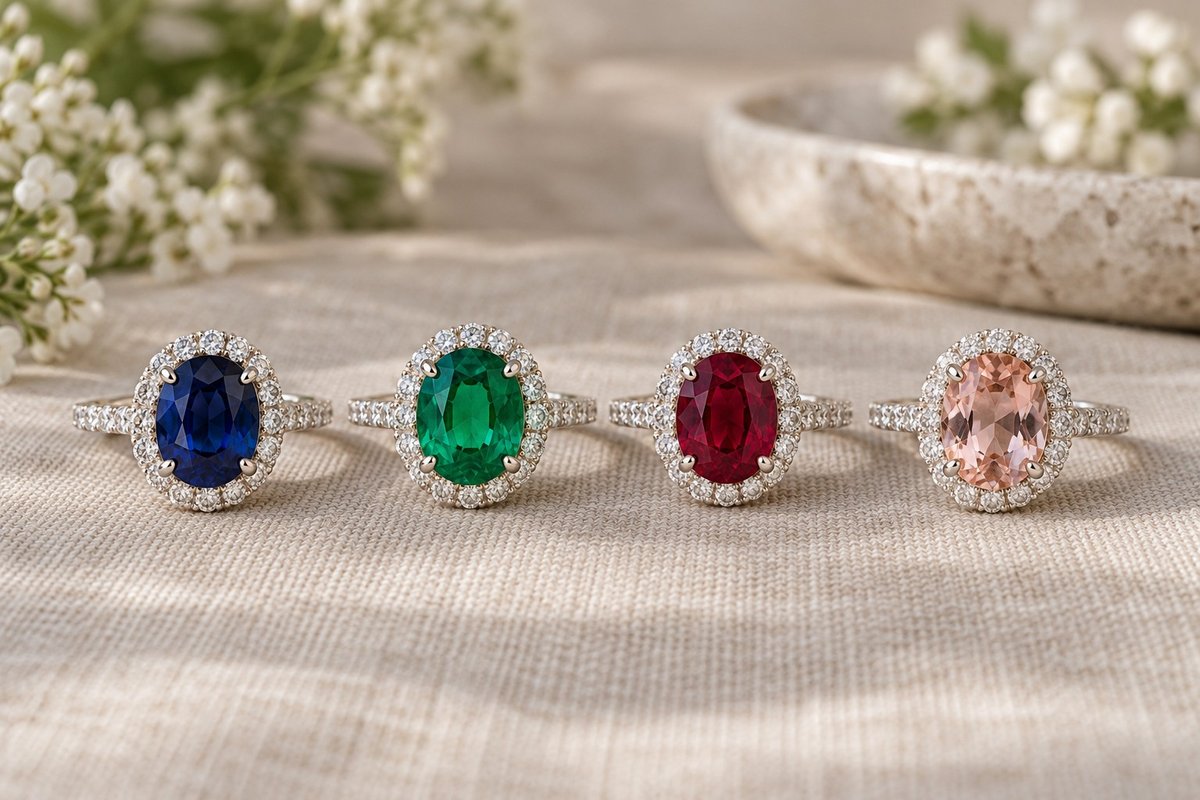
The best gemstones for an engagement ring worn every day are sapphire and ruby, which combine a Mohs hardness of 9 with excellent toughness and no cleavage, followed by moissanite and spinel. Morganite and aquamarine are reasonable choices with a protective setting and some care, while emerald, tanzanite, opal and pearl are better kept for occasional wear or chosen knowing they will need extra protection and may need repair over the years.
This guide includes a few product links near the end. As an Amazon Associate, Diamond Taire earns from qualifying purchases, at no extra cost to you.
This guide explains why hardness alone is not enough, compares ten popular ring gemstones, and shows how the right setting makes a more delicate stone practical.
- Hardness is scratch resistance; toughness is resistance to chipping and breaking. A ring stone needs both, plus stability against heat and chemicals.
- Sapphire and ruby are the strongest all-rounders after diamond: hard, tough and without cleavage.
- Most coloured gems are treated. Heating is routine for many; emerald is very often fracture-filled. Treatments should be disclosed.
- The setting matters as much as the stone. A bezel or a halo protects edges that prongs leave exposed.
- Soft or fragile stones are not “wrong”, but they suit occasional wear or a buyer who accepts extra care and possible repairs.
At a glance
- Sapphire and ruby are the best everyday engagement ring gemstones after diamond, with a Mohs hardness of 9, excellent toughness and no cleavage.
- Moissanite (9.25) and spinel (8) are also very good choices for daily wear.
- Morganite and aquamarine work with a protective setting, while tanzanite, opal and pearl suit occasional wear.
- Most coloured gems are treated, and GIA estimates 90 percent or more of emeralds are fracture-filled, so ask for treatments in writing.
- A bezel or halo setting protects a softer stone’s edges better than high, open prongs.
- The biggest mistake is judging durability by Mohs hardness alone and ignoring toughness and cleavage.
Hardness, toughness and stability: the three things that decide durability
Gemmologists, including GIA in its gem care guides, describe durability as three separate properties. Understanding all three is the key to choosing well.
Hardness: resistance to scratching
The Mohs scale ranks minerals from 1 to 10 by which can scratch which. It is a ranking, not an even ruler: GIA notes that diamond, at 10, is many times harder than corundum (sapphire and ruby) at 9, even though they are only one step apart. In general, GIA’s guidance suggests that gems of 7 or higher are durable enough for rings and those of 8 or higher are well suited to everyday wear. Everyday dust and grit commonly contain quartz, which sits at 7, so softer stones gradually lose their polish and their facet edges become rounded.
Toughness: resistance to chipping and breaking
A hard stone can still be brittle. Toughness describes how well a stone survives a knock, such as hitting a door frame or a bench top. Some gems also have cleavage, a direction in the crystal where the atomic bonds are weaker, so a sharp blow in the wrong direction can split the stone cleanly. Diamond is the classic example: it is the hardest natural material, yet GIA points out that a hard blow can still cleave it, even while being worn.
Stability: resistance to heat, light and chemicals
Some stones, or their treatments, react to heat, sudden temperature changes, household chemicals, cosmetics or even mild acids such as lemon juice. Stability matters most for treated stones and for organic gems such as pearl.
Engagement ring gemstones compared
The figures below come from GIA’s gem care and cleaning guides and its engagement ring alternatives guidance. Toughness is given in GIA’s own wording where GIA states it; where GIA gives no rating, the table says so rather than guessing.
| Gemstone | Mohs hardness | Toughness and cleavage | Common treatments to ask about | Daily-wear verdict |
|---|---|---|---|---|
| Diamond (benchmark) | 10 | Hardest gem, but has cleavage directions; a hard blow can cleave it | Laser drilling and other clarity treatments exist and should be disclosed | Excellent |
| Sapphire | 9 | Excellent toughness, no cleavage | Heating is common; lattice diffusion; occasional lead-glass fracture filling | Excellent |
| Ruby | 9 | Excellent toughness, no cleavage | Heating is common; lead-glass fracture filling is more common than in sapphire | Excellent (check for glass filling) |
| Moissanite | 9.25 | Laboratory-created; very hard and suitable for everyday wear | Not a natural gem; must be described as created | Very good |
| Spinel | 8 | Good toughness | Some heat treatment; fracture filling is rare | Very good |
| Morganite | 7.5 to 8 | No GIA toughness rating given; protect from hard knocks | Nearly all is heated to improve colour; rarely fracture-filled | Good with a protective setting |
| Aquamarine | 7.5 to 8 | No GIA toughness rating given; protect from scratches and knocks | Rarely fracture-filled; avoid heat exposure | Good with a protective setting |
| Emerald | 7.5 to 8 | Fair to good toughness; usually included and fractured | GIA estimates 90 percent or more are fracture-filled with oils, resins or polymers | Possible with care and a protective setting |
| Tanzanite | 6 to 7 | Fair to poor toughness; has cleavage | Routinely heated; rarely coated or fracture-filled | Occasional wear, or very protective setting |
| Opal | About 5 to 6.5 | Very poor to fair toughness; can craze with heat | Impregnation with oil, wax or plastic; sugar and smoke treatments | Occasional wear |
| Pearl | 2.5 | Toughness usually good, but very soft and easily scratched | Dyeing, impregnation, coating, bleaching, irradiation | Occasional wear |
The strongest choices for everyday wear
Sapphire
Sapphire is the gem most often recommended as a diamond alternative for good reason. GIA describes corundum as having excellent toughness and no cleavage, so it resists both scratching and breaking. It comes in blue and in many other colours, including colourless and pink. Heating to improve colour and clarity is common and, according to GIA, heat-treated sapphire is very durable. Stones treated by lattice diffusion can have colour concentrated near the surface, which could be lost if the stone is chipped and recut, so ask whether diffusion has been used.
Ruby
Ruby is the red variety of the same mineral, so it shares sapphire’s hardness and toughness. The difference for buyers is treatment: some rubies have surface-reaching fractures filled mainly with high-lead glass. GIA notes that these stones need more care, because the glass can be damaged by chemicals as mild as lemon juice, and they should only be cleaned with a damp cloth. Ask directly whether a ruby is glass-filled and get the answer in writing.
Moissanite
Moissanite is a laboratory-created gem that GIA lists at 9.25 on the Mohs scale, second only to diamond among popular ring stones, which makes it practical for daily wear. It looks different from diamond in ways that some people love and others notice. Rather than repeat that comparison here, see moissanite vs diamond: what you need to know before you buy.
Spinel
Spinel is an underrated option. At 8 on the Mohs scale with good toughness, GIA describes it as durable enough for everyday jewellery. Intense heat can fade some colours, so mention it to a jeweller before any repair.
Good choices that need a little more care
Morganite
Morganite is the pink to peach variety of beryl, at 7.5 to 8 on the Mohs scale. According to GIA’s morganite engagement ring guidance, nearly all morganite is heat-treated to deepen the pink, and the colour is stable in normal wear. It is less durable than sapphire, so GIA suggests a bezel as the safest setting and recommends removing the ring for gardening, cleaning and sport. Because it is softer than the quartz in household dust, expect it to need re-polishing over the years.
Aquamarine
Aquamarine is the blue variety of beryl with the same hardness range as morganite. GIA says it is durable enough for most jewellery, including engagement rings, when properly cared for, but it should be protected from scratches, hard knocks and heat. Its often pale colour depends heavily on good cutting.
Beautiful, but think carefully before choosing for daily wear
Emerald
Emerald has the same hardness as other beryls but is usually much more included and fractured. GIA estimates that 90 percent or more of emeralds are fracture-filled, and the oils and resins used can change with heat, light and chemicals. GIA advises against ultrasonic and steam cleaners for emerald. An emerald engagement ring can be worn daily by a careful wearer in a protective setting, but it should be inspected regularly, and some stones may need re-oiling or repair over time.
Tanzanite
Tanzanite sits at 6 to 7 on the Mohs scale and GIA rates its toughness as fair to poor, with cleavage that makes it prone to breaking when struck. Tanzanite is routinely heated to produce its blue to violet colour, a treatment GIA describes as stable. GIA’s gemstone durability guidance suggests tanzanite is best suited to pendants, earrings or rings worn occasionally. If you love it for an engagement ring, choose a bezel or a halo and accept that it may need replacing one day.
Opal
Opal is soft (about 5 to 6.5) with very poor to fair toughness, and intense heat or sudden temperature changes can cause crazing, a network of fine cracks. It may be impregnated with oil, wax or plastic, or given sugar or smoke treatments, and some opal jewellery uses thin layers of opal backed or capped with other materials, so ask exactly what you are buying. GIA’s only safe cleaning method for opal is warm, soapy water.
Pearl
Pearl rates only 2.5 on the Mohs scale, so it scratches very easily, even though GIA notes its toughness is usually good. Acids, cosmetics, hairspray, perfume and perspiration can all damage the surface. A pearl engagement ring is a romantic choice for someone who will put it on last and take it off first, but it is not a ring for washing up, gardening or the gym. For more on pairing and caring for pearls, see how to choose, wear and care for pearls and diamonds.
Treatments: what should be disclosed
Many coloured gemstones are treated, and a treated stone is not automatically a poor choice. What matters is that you know, because some treatments need special care or affect value. The US Federal Trade Commission’s Jewelry Guides, as summarised in its “In the Loupe” business guidance, say sellers should disclose a treatment when it is not permanent, when the stone needs special care because of it, or when it significantly affects value. Rules differ in other countries, but these three tests are a sensible standard to ask any seller to meet.
The same guidance says laboratory-created gemstones should carry a clear qualifier such as “laboratory-grown” or “laboratory-created” before the gem name, and that imitations should be described as “imitation” or “simulated”. Laboratory-created sapphire and ruby are chemically the same mineral as the natural stones and are equally durable, so they are worth considering if origin is not important to you.
How the setting protects a softer stone
GIA’s gemstone durability guidance highlights that settings covering the girdle, the outer edge of the stone, give the most protection to stones that chip or cleave easily, and that prongs offer less protection. In practice that means:
- Bezel settings wrap metal around the whole edge and are the most protective choice for emerald, tanzanite, opal and morganite.
- Halo settings place a ring of smaller stones around the centre stone, which takes some of the knocks.
- Lower profiles sit the stone closer to the finger so it catches less.
- Six prongs or claw guards offer more security than four thin prongs if you prefer an open look.
- Keep stones apart. Harder stones rub and scratch softer ones, so store and stack rings thoughtfully.
For a full comparison of setting types, see diamond ring settings: how to choose the best one for your stone. The metal matters too, because it affects how prongs and bezels wear over time; platinum vs white gold explains the trade-offs.
Who each choice suits
- Very active hands (healthcare, trades, gym, gardening): sapphire, ruby, moissanite or spinel, ideally in a bezel or low setting.
- Office and everyday wear with some care: any of the above, plus morganite and aquamarine in a protective setting.
- A careful wearer who loves a particular colour: emerald in a bezel or halo, with regular inspection.
- Occasional wear or a second “dress” ring: tanzanite, opal and pearl, which can also be chosen for a right-hand or anniversary ring.
Checklist before you buy a gemstone engagement ring
- Check the stone’s hardness and toughness against the wearer’s daily life, not just its colour.
- Ask whether the stone is natural or laboratory-created, and get that in writing.
- Ask exactly which treatments have been used, and whether any need special care.
- For valuable stones, ask whether an independent gemmological laboratory report is available that covers identity and treatment.
- Choose a setting that protects the edges of softer or tougher-to-repair stones.
- Confirm the seller’s warranty, repair and re-polishing terms.
- Learn the safe cleaning method for that gem before the first clean; ultrasonic and steam cleaners are unsafe for several of them.
- Insure the ring and keep the treatment disclosure with your valuation.
Common mistakes to avoid
- Judging durability by Mohs hardness alone. Tanzanite’s cleavage and emerald’s fractures matter as much as their scratch resistance.
- Not asking about treatments. A glass-filled ruby or an oiled emerald needs different care from an untreated stone.
- Putting a fragile stone in a high, open prong setting. It is the setting most likely to catch and chip.
- Using an ultrasonic or steam cleaner on the wrong gem. GIA advises against both for emerald, tanzanite, opal and pearl.
- Wearing the ring for heavy work. Even sapphire can be damaged; take any ring off for weights, gardening and cleaning with chemicals.
- Expecting a soft stone to look new forever. Plan for re-polishing or replacement if you choose opal, pearl or tanzanite for daily wear. To keep any ring looking its best, see how to clean and maintain your diamonds and the stone-specific care advice above.
Related guide: Pink Diamond Ring: How to Buy the Right One Without Regret.
Related guide: Morganite Engagement Ring: How to Choose One Without Regret.
Related guide: Blue Gemstones: How to Choose the Right One Without Regret.
Sources this guide draws on: GIA’s gem care and cleaning guides for sapphire, ruby, spinel, morganite, aquamarine, emerald, tanzanite, opal, pearl and diamond; GIA’s guidance on diamond alternatives and morganite engagement rings; GIA’s paper on gemstone durability in design and display; and the US Federal Trade Commission’s Jewelry Guides and “In the Loupe” business guidance on treatment disclosure and created-stone terminology.
Useful tools for this guide
Practical picks for choosing, checking and caring for jewellery. As an Amazon Associate, Diamond Taire earns from qualifying purchases, at no extra cost to you. Prices and availability are set by Amazon and may vary by country.
- Gemstones of the World by Walter Schumann (5th edition)
A classic illustrated reference to more than 1,900 gemstones.
View on Amazon - Foldable 30x Jeweller’s Loupe
Pocket magnifier for checking stones, settings and hallmarks up close.
View on Amazon - KElofoN Travel Jewellery Case
Compact case with ring rolls and earring slots so pieces do not scratch each other.
View on Amazon
Frequently asked questions
What is the most durable gemstone for an engagement ring after diamond?
Among popular natural gems, sapphire and ruby are the most durable after diamond, combining a hardness of 9 with excellent toughness and no cleavage. Moissanite, a laboratory-created gem, is slightly harder at 9.25 and is also practical for daily wear.
Can you wear an emerald engagement ring every day?
You can, but it needs more care than sapphire or diamond. Most emeralds are fracture-filled and have fair to good toughness, so choose a protective setting, avoid ultrasonic and steam cleaning, and have the ring checked regularly.
Is morganite durable enough for an engagement ring?
Morganite, at 7.5 to 8 on the Mohs scale, is durable enough for everyday wear with care. A bezel setting gives the best protection, and you should remove the ring for rough tasks. Expect it to need re-polishing over the years.
Is tanzanite a good engagement ring stone?
Tanzanite is beautiful but relatively soft at 6 to 7, with fair to poor toughness and cleavage. GIA’s durability guidance suggests it suits occasional-wear rings better than everyday rings. If you choose it, use a bezel or halo and treat the ring gently.
Are opal and pearl engagement rings a bad idea?
They are not a bad idea, but they are not daily-wear stones. Opal can crack or craze and pearl scratches very easily and reacts to cosmetics and perspiration. They suit wearers who will take the ring off often, or work well as a dress ring alongside a tougher everyday band.
A coloured engagement ring can last a lifetime when the stone suits the wearer’s life and the setting is chosen to protect it. Start with the gem’s toughness as well as its hardness, ask plainly about treatments, and the ring you choose will stay as beautiful as the day it was given.