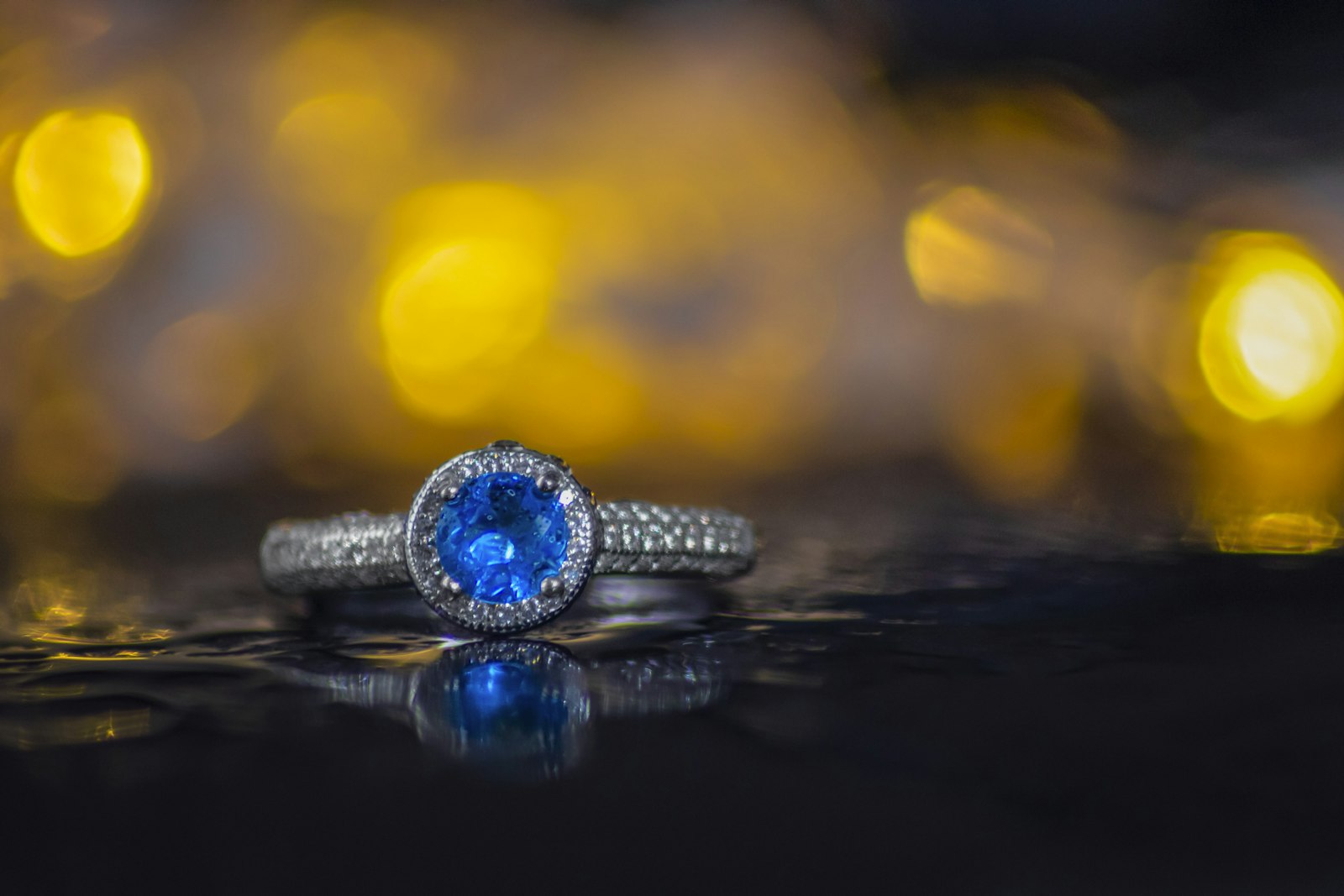
Most people shopping for a diamond ring spend weeks learning about the stone and about twenty minutes thinking about the setting. That is the wrong ratio. The setting decides how large the diamond looks, how much light reaches it, how often the ring needs repair, whether it snags on clothing, and whether it can be resized in ten years. Two people can buy the identical certified stone and end up with rings that look and wear nothing alike.
This guide covers the settings you will actually be offered, what each one does well, and what each one costs you in practical terms.
What a setting actually is
A ring has three parts: the shank (the band that goes around the finger), the head or basket (the metal structure that grips the stone), and the gallery (the open space underneath the stone, between the head and the finger). The setting style is mostly a description of the head, though some styles change the shank as well.
Two things matter more than aesthetics when you compare settings:
- How much of the stone’s surface is covered by metal. Metal blocks light. A diamond’s brilliance depends on light entering through the top, bouncing inside, and coming back out. Cover the sides and you dim it.
- How exposed the stone’s edges are. A diamond is the hardest natural material on the Mohs scale at 10, but hardness is resistance to scratching, not resistance to shattering. Diamonds have cleavage planes and a sharp knock on an exposed girdle or a pointed corner can chip one. Settings differ enormously in how much protection they offer.
Every trade-off below comes back to those two facts.
Solitaire (prong) settings
The classic. A single stone held by four or six thin metal claws rising from a basket.
What it does well. Nothing blocks light. A prong-set diamond is the brightest presentation of a given stone, because only tiny points of metal touch it. Prongs also lift the stone above the finger, which lets light in from the sides. It is the most repairable setting in the world — every jeweller on earth can retip a prong — and the easiest to resize, since the shank is usually plain.
What it costs you. Prongs wear down. They are thin pieces of metal being knocked against door handles, keyboards and car doors thousands of times a year. A prong that has worn to half its thickness can bend, and a bent prong lets a stone loosen. This is the single most common cause of lost diamonds. Prong-set rings need a check roughly once a year and retipping every several years depending on wear.
Four prongs or six? Four prongs show more of the diamond and make round stones look slightly squarer. Six prongs cover marginally more surface but give redundancy — if one fails, five still hold. For a stone above roughly one carat, or for anyone hard on their hands, six is the safer choice. For square and rectangular stones, look for V-prongs or corner claws that wrap the vulnerable points rather than sitting flat against them.
Halo settings
A ring of small accent diamonds encircling the centre stone.
What it does well. A halo makes the centre stone read visually larger — often by the appearance of half a carat or more — for a fraction of what that extra weight would cost. It also raises the perceived sparkle of the whole ring, and it can flatter a centre stone that is slightly lower in colour grade, because the surrounding brightness gives the eye nothing to compare against.
What it costs you. More stones means more settings, and more settings means more failure points. Halo accent stones are small and set in fine metal; they do come loose and they do fall out. Replacing one is cheap, but you have to notice it first. A halo also makes resizing more complicated if the accent stones run down the shoulders of the band, and it makes the ring harder to match with a straight wedding band, since the halo sits proud of the shank. If you want a flush-fitting wedding band, ask about a contoured or notched band before you commit.
Double halos and hidden halos. A double halo amplifies both the benefit and the maintenance. A hidden halo — accent stones set horizontally under the centre stone, visible only from the side — is a quieter option that adds detail without changing the ring’s footprint.
Pavé and micro-pavé
Tiny diamonds set close together along the shank, held by miniature beads of metal raised from the band itself. The name comes from the French for “paved” — the effect should read as a continuous surface of light, not as individual stones.
What it does well. It turns the whole band into part of the design and adds a great deal of sparkle for relatively little stone weight. Micro-pavé, using stones under roughly 1mm, produces the finest and most seamless effect.
What it costs you. Pavé is the least resizable setting in common use. Stones set into the band mean the band cannot be cut and stretched without disturbing them. Some rings can be sized by a limited amount by adding or removing metal at the bottom of the shank if that section is left plain; many cannot. Get the size right at the outset, and ask the jeweller in writing what sizing range the ring allows.
Pavé also loses stones. Bead settings are small and shallow. Expect to lose one occasionally over a lifetime of daily wear, and budget for that as normal maintenance rather than a defect.
Shared prong and French pavé are variants where the stones sit deeper and are visible from the side, letting more light in. Channel setting — stones sunk in a groove between two metal walls — is the most secure of this family and by far the most snag-resistant, at the cost of some brightness.
Bezel settings
A continuous rim of metal wrapped around the entire perimeter of the stone, or a half-bezel, which wraps only two sides.
What it does well. This is the most protective setting available. The girdle — the vulnerable edge of the stone — is completely enclosed. Nothing snags: no prongs to catch on jumpers, gloves, hair or a child’s skin. For nurses, teachers, gardeners, climbers, anyone who works with their hands, and anyone with small children, a bezel is the practical answer. Bezels also hold up extremely well over decades with minimal maintenance.
What it costs you. Light. A full bezel covers the girdle and part of the crown, and the stone will look somewhat less brilliant than the identical stone in prongs. Bezels also tend to make a diamond look slightly smaller than its carat weight suggests, because you see less of it. Skilled bezel work can mitigate this — a thin, well-cut bezel with an open gallery underneath lets side light in — but the trade is real.
Half-bezels are a genuine middle ground: protection on the two directions of most impact, open on the others.
Tension and tension-style settings
A true tension setting holds the stone by the compressive force of the metal itself, with the diamond appearing to float in a gap in the band.
What it does well. It is striking, and it exposes more of the stone than anything else.
What it costs you. Real tension settings are extremely difficult to resize — the tension is calibrated to the exact circumference — and they require hard, springy alloys. They are also difficult to repair and cannot be undertaken by every jeweller. Many “tension” rings sold are actually tension-style: a hidden bar or bezel does the holding and the tension look is cosmetic. That is not a criticism; tension-style rings are usually more practical. But you should know which one you are buying, because the price and the serviceability differ.
Three-stone settings
A centre stone with a matched stone on each side, traditionally read as past, present and future.
What it does well. It adds substantial visual width and total carat weight without the cost of a single large stone. Side stones can be tapered baguettes, trilliants, pear shapes or smaller rounds, and each changes the character of the ring considerably.
What it costs you. Matching matters enormously here and is where cheap three-stone rings fail. If the side stones differ from the centre in colour or in cut quality, the eye reads the ring as mismatched even when it cannot say why. Ask whether the side stones are graded, and ask for the ring to be viewed in daylight, not only under shop lighting. Shop spotlights are engineered to flatter diamonds and will hide colour mismatch.
Cathedral, basket and low-profile
These describe the height of the setting rather than the grip.
- Cathedral: arches of metal sweep up from the shank to support the head, like the flying buttresses of a cathedral. Elegant, adds visual height, gives the stone extra support. Slightly harder to clean where the arches meet the head.
- Basket: the stone sits in a horizontal cradle, lower to the finger. More secure, cleaner lines, less snagging.
- Low profile / low-set: the stone sits as close to the finger as its depth allows. The most practical for daily wear and for anyone who wears gloves. Less light from the sides, so a well-cut stone matters more.
If you are choosing between two rings and cannot decide, put both on and run your hand into a coat pocket. The one that catches is the one you will resent.
Metal choice interacts with the setting
The setting and the metal are not independent decisions.
Platinum is dense and holds a shape under stress; prongs made of platinum bend rather than snap, and when they wear, they displace rather than lose metal. It is the traditional choice for prongs holding significant stones. It develops a matte patina over time that many people like and some do not — it can be repolished.
18k white gold is harder than platinum in the alloy sense but more brittle, and it is almost always rhodium plated to achieve a true white. That plating wears off and needs redoing every one to three years depending on wear and skin chemistry. Budget for it.
14k gold is harder and more scratch-resistant than 18k, and cheaper, with a slightly less rich colour in yellow.
Yellow and rose gold hide nothing about a stone’s colour grade — in fact a warmer metal can make a lower colour grade look intentional rather than deficient, which is a legitimate way to buy well. A K-colour stone that looks yellowish in platinum can look beautifully warm in rose gold.
A short checklist before you buy
- Ask what the ring’s resizing range is and get it in writing. This is the question most people forget and most regret.
- Ask how often the setting should be inspected and whether the seller offers free periodic checks. Many do.
- Look at the ring in daylight, not only under the display lighting.
- Try it on and use your hand — pocket, hair, jumper sleeve.
- Confirm what the warranty covers. A lost centre stone from a failed prong is often excluded unless you have kept up scheduled inspections. Read that clause.
- Insure it separately. Most household contents policies cap individual item cover well below the value of a significant ring, and many require the item to be specified by name and value.
The honest summary
There is no best setting, only settings that suit particular hands and particular lives.
- Want maximum brilliance and classic lines, and don’t mind annual maintenance? Six-prong solitaire.
- Want the stone to look as large as possible for the money? Halo.
- Work with your hands, or have small children? Bezel or low-set basket.
- Want the band itself to sparkle, and are certain of your size? Pavé or channel.
- Want width and presence without a huge single stone? Three-stone.
Choose the setting for the life the ring will actually live, not the life it will live in the photograph.
This article is educational and general in nature. Specifications, grading standards and available options vary between jewellers and between markets. Always obtain independent certification for a significant stone and read the terms of any warranty before purchase.
Sources consulted: GIA 4Cs — Diamond Clarity (https://4cs.gia.edu/en-us/diamond-clarity/); GIA 4Cs education library (https://4cs.gia.edu/).