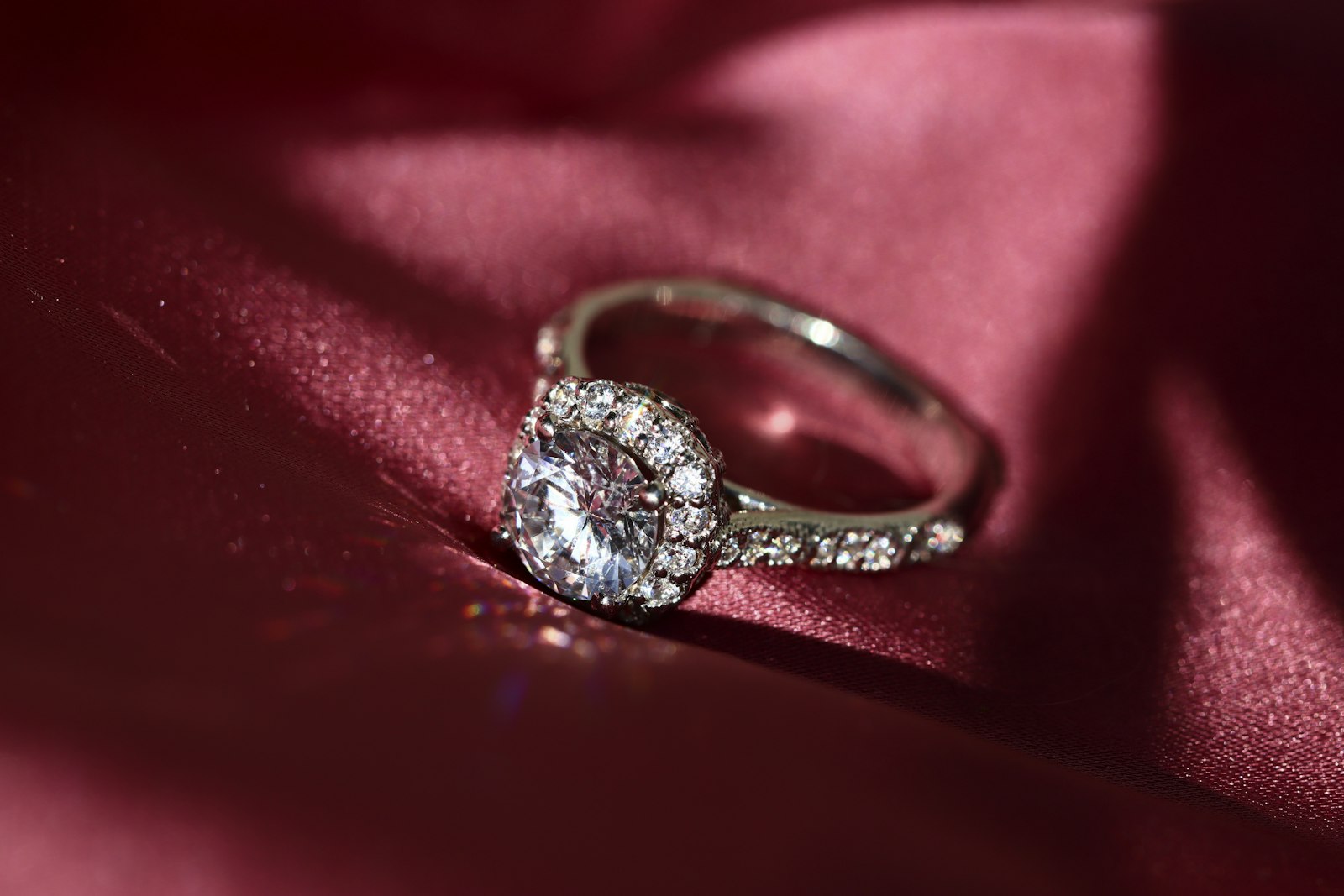
A diamond’s beauty is meant to last forever, but maintaining its brilliance requires proper care. Whether you have an engagement ring, a necklace or a loose stone, routine attention keeps it bright and, more importantly, keeps it in its setting.
Almost everything that dulls a diamond is reversible. Almost everything that loses one is preventable. Here is how to clean one at home, what damages it, when a machine is the wrong tool, and what to watch for as a piece ages.
Why diamonds go dull
A diamond does not lose its sparkle. It gets coated. The culprits are ordinary: skin oils, hand cream, sunscreen, soap residue, hairspray and cooking grease. The film settles most heavily on the pavilion, the underside of the stone, which is exactly where light needs to bounce back out. A greasy pavilion turns a lively stone flat and grey. That is why cleaning the back of a ring matters more than polishing the top.
The at-home cleaning method, step by step
Regular cleaning prevents dirt and oils from dulling your diamond’s sparkle. This method is safe for an untreated diamond in gold or platinum with no other gemstones set alongside.
- Block the drain first. Every time. More rings are lost down plugholes than are ever damaged by cleaning.
- Use a bowl, not the sink. Fill it with warm water, not hot: sudden temperature changes stress stones and settings, and hot water is no more effective.
- Add a few drops of mild washing-up liquid. Anything moisturising leaves the very film you are trying to remove.
- Soak for twenty to forty minutes. This does most of the work by softening the oil layer. Brushing a dry stone just moves grime around.
- Brush gently with a soft toothbrush. A baby toothbrush is right; a firm adult brush is not. Work the underside of the stone and behind the gallery, then the base of each claw.
- Rinse in a second bowl of clean water, not under a running tap.
- Dry with a soft, lint-free cloth, then air dry fully. Trapped moisture causes water marks and encourages tarnish on accent metals.
Skip harsh chemicals entirely. Bleach and strong household cleaners attack metal settings, not the diamond, and the setting is what holds your stone.
How often
A ring worn every day stays bright on a weekly soak, with a careful brushing monthly. Pieces worn occasionally are better cleaned after each wearing than on a schedule. Earrings collect oil and hair product at the back, where nobody looks.
What never to use
- Chlorine and bleach. The serious one. Chlorine attacks the alloy metals in gold, and repeated exposure can cause fine cracking in stressed areas: claws, and the join of the shank. A claw rarely snaps dramatically; it fails quietly and the stone goes missing. Pools, spas and bleach-based cleaners are all sources. Platinum resists it; gold and silver do not.
- Toothpaste and abrasive pastes. Mildly abrasive by design, toothpaste will not scratch a diamond, but it hazes gold, silver and polished platinum with fine scratches and damages softer gems set alongside.
- Neat ammonia and jewellery “dips”. Dips formulated for silver are not for gold, plated pieces, or treated and porous stones, and prolonged ammonia can etch settings and strip finishes.
- Acetone and solvents, which attack glued components, some antique settings and resin used in stone treatment.
- Boiling water and hot taps on anything treated, fractured or set with a second gem type. Thermal shock can extend a feather in a stone.
Ultrasonic and steam cleaners, and when they are a bad idea
Professional ultrasonic cleaners and steamers remove stubborn dirt that home cleaning cannot reach, which is why a jeweller’s clean makes a piece look new. They are also the fastest way to cause an expensive problem.
An ultrasonic tank passes high-frequency sound through warm detergent, creating microscopic bubbles that collapse against the piece and scrub where no brush reaches. A steamer blasts off residue with hot, pressurised steam. Both apply energy: vibration in one case, heat and pressure in the other. Fine for a sound, untreated diamond in a well-made setting; not fine for a great many other things.
Do not use an ultrasonic or a steamer on:
- Fracture-filled or clarity-enhanced diamonds. These have surface-reaching breaks filled with a glass-like substance to make them less visible. Heat and aggressive cleaning can damage or displace that filler, visibly and irreversibly. If you do not know whether a stone is filled, ask, and tell any jeweller cleaning it.
- Any stone with a feather reaching the surface. Vibration and thermal shock can extend it.
- Emeralds. Almost all are treated with oil or resin to improve the appearance of fissures. Ultrasonic cleaning strips that treatment out and leaves the stone looking worse.
- Opals, pearls, turquoise, coral, amber, lapis lazuli and malachite, which are soft, porous, or both. Pearls have a thin nacre layer and are usually strung on silk, which the machine also ruins.
- Tanzanite, moonstone, kunzite and topaz, and other cleavage-prone or heat-sensitive stones, along with anything dyed, coated or glass-filled.
- Antique closed-back or foiled settings, where liquid gets behind the stone and cannot escape, and the foil giving the stone its colour is destroyed.
- Anything held with adhesive rather than metal.
- Any piece with a stone you can hear or feel moving. An ultrasonic will finish the job and shake it out.
Before any machine cleaning, hold the piece near your ear and tap it with a fingernail. A faint rattle means a stone is loose; take it to a jeweller instead. Machines suit a known, sound, untreated diamond. Warm soapy water cleans any piece perfectly with no risk at all.
Storage that actually protects things
Store diamonds in separate compartments to prevent them scratching other jewellery. Diamond is the hardest natural material there is, so a loose ring in a dish will scratch every stone and metal surface it touches, including other diamonds.
- Use a lined box with individual compartments, or soft pouches, one piece per pouch.
- Hang or lay chains flat rather than coiling them, which causes kinks and breaks.
- Keep silver with an anti-tarnish strip, and keep everything out of the bathroom, where humidity and aerosol overspray do their work.
- Never leave a ring loose on a windowsill or the edge of a basin, where most household losses happen.
When to take a ring off
- Sport and the gym. Gripping a barbell or handlebar is a common way to bend a shank out of round and flatten claws.
- Gardening. Grit gets under stones, and soil is abrasive.
- Swimming, spas and hot tubs. Chlorine damages the metal, and cold water shrinks fingers, which is how rings come off in the sea.
- Cleaning and dishwashing. Bleach-based products and the plughole both await.
- Sleeping, to avoid pressure on the setting and snagging on bedding.
- Applying sunscreen, hand cream and hair products, which build the film that dulls a stone.
- Lifting and heavy manual work. One hard knock on a stone’s girdle can chip it. Diamond is extremely hard but not unbreakable, and a sharp impact at the wrong angle is what it will not tolerate.
Keep a screw-top pot in your bag and a dish in a fixed spot at home. A predictable place beats a safe place you have to remember.
Professional cleaning and setting checks
Visit a professional jeweller for a deep clean and inspection, and have them check the prongs and settings while the piece is on the bench. Worn prongs loosen, and a loose prong is how a diamond is lost. Every six to twelve months suits a ring worn daily; annually is plenty otherwise. The cost is usually small relative to what it protects, and many jewellers do it free for pieces they sold.
An inspection takes minutes under magnification and covers claw tips for thinning or flattening, whether the centre stone moves under gentle pressure, the bead settings on pavé and halo stones, the shank at the palm side, whether the ring is still round, and chips on the girdle.
Between visits, one more check takes seconds: run the ring over lint or a knit. If it snags, a claw tip has lifted or worn and needs attention now, not next year.
What wear looks like over the years
None of this is a failure of the ring. It is what daily wear does to metal, and it is repairable if caught early.
| What you see | What it means | Typical remedy |
|---|---|---|
| Claw tips look flat or short | Metal worn away by contact | Retipping the claws |
| Band is thin at the palm side | Normal abrasion over years | Reshanking, or a partial shank |
| White gold looks warm or grey in patches | Rhodium plating has worn through | Replating |
| Ring is oval rather than round | Bent by gripping or impact | Reshaping and checking stones |
| Small stones missing from pavé | Worn bead settings | Replacing stones, retightening beads |
| Platinum looks dull and scratched | Normal patina; metal displaced, not lost | Polishing, or leave it |
Seek help promptly for loose or damaged prongs, a cloudy appearance a proper soak does not fix, a visible chip, or a missing accent stone. A stone that will not clean up usually has a film trapped under the setting; occasionally it is surface damage, worth knowing about early.
Before and after travel
Before you go: photograph each piece from a few angles, including any hallmark, and keep the photographs separate from the jewellery. Clean everything first so you can see its condition, and check the stones for movement. Decide honestly what needs to come, and consider a plain band instead of an engagement ring on a beach holiday. Pack what you take in a compartmented roll and carry it with you; fine jewellery should never go in checked luggage.
While you are away: take rings off before swimming and before applying sunscreen. Sand is abrasive, salt corrodes some alloys, and sunscreen coats everything. If you swim in a ring anyway, rinse it in fresh water as soon as you can.
When you get home: soak everything to clear sunscreen and salt, dry it fully, and check each stone for movement before it goes into storage. If a piece took a knock, have it looked at rather than waiting.
Documentation worth keeping
Keep the grading report, the receipt and your own photographs in one place, and refresh a professional appraisal every few years so your records reflect current values. Insuring and valuing jewellery is a subject of its own, covered separately.
Keeping it up
All of this comes to roughly twenty minutes a month: a weekly soak, a monthly rattle and lint test, a professional check once or twice a year, and a clean after sunscreen, salt water or a knock. Diamonds are durable; the metal holding them is not, and that is where your attention pays off.