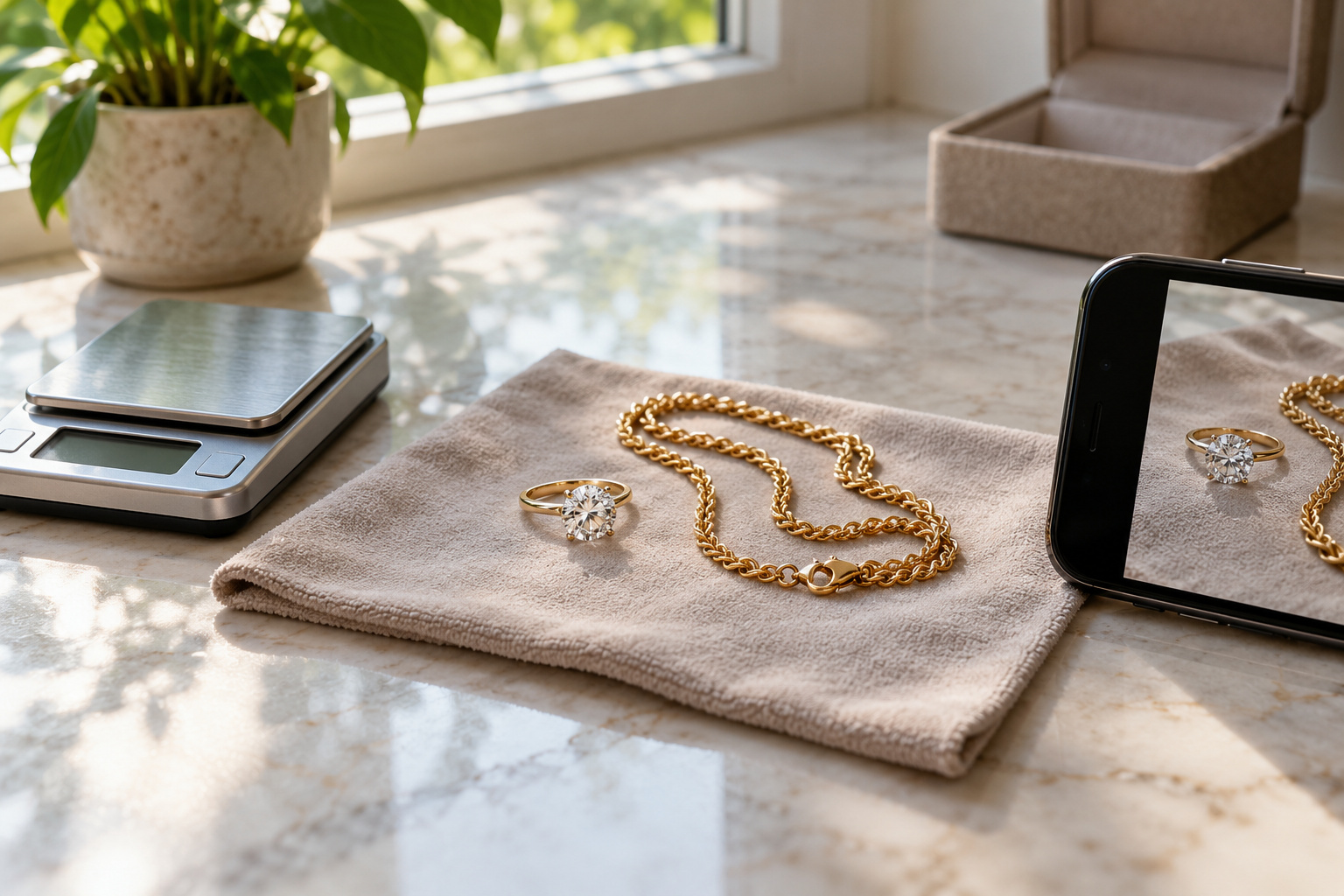
The main places to sell jewelry online are mail-in buying services, online auction platforms, online consignment sellers and peer-to-peer marketplaces or classifieds. Which is best depends on what you are selling: documented diamonds and signed pieces usually do better through specialist auctions or consignment, gold and everyday pieces sell fastest to buyers who pay outright, and peer-to-peer sales can pay the most but carry the highest scam risk.
This guide includes a few product links near the end. As an Amazon Associate, Diamond Taire earns from qualifying purchases, at no extra cost to you.
This guide compares each online route honestly, shows what to prepare before you list anything, and spends real time on the scams that target people selling jewellery online, because that is where most sellers lose money. It does not recommend any particular company: terms, fees and reputations change, so the aim is to give you the questions to ask of any buyer you are considering.
At a glance
- Know what you have first: metal, karat, stone type and, for diamonds, a grading report. Offers depend heavily on documentation.
- Selling outright online is fastest; consignment and auctions are slower but can pay more for the right piece.
- Peer-to-peer selling can pay the most, but you take on payment fraud, return fraud and shipping risk yourself.
- Get offers from at least three different types of buyer before accepting anything.
- Never ship before payment has truly cleared, never accept an overpayment, and never share verification codes.
Before you choose where to sell: know what you have
Every online buyer prices from the information you give them, and every gap in that information is resolved in the buyer’s favour. Spending an hour on preparation is usually the single most valuable thing a seller can do.
Identify the metal and stones
Look for stamps inside bands and on clasps, such as karat marks or platinum marks. Our guides on how to tell if jewellery is real gold and gold karats explain what the marks mean and how they affect value. For stones, our guides on checking a diamond and telling if pearls are real cover simple first checks, though only a qualified gemmologist or laboratory can confirm identity.
Find or get documentation
A grading report from a respected laboratory lets a remote buyer price a diamond without guesswork. Check that the report number matches any laser inscription on the stone and verify the report on the laboratory’s own website. Our guide to reading a diamond grading report explains what each section means. Note whether the stone is natural or lab-grown, because the resale markets for the two are very different; our lab-grown vs natural comparison covers why.
Set realistic expectations
Resale offers are normally well below what the piece cost new, and well below any insurance valuation, which reflects retail replacement cost. Our honest look at whether fine diamonds hold their value explains the gap. Knowing this in advance stops you either accepting a lowball offer in frustration or holding out for a figure no buyer will pay.
The online selling routes compared
| Route | How it works | Speed | Price potential | Main risks | Best for |
|---|---|---|---|---|---|
| Mail-in buying service | You send the piece insured; they assess it and make an offer | Fast once received | Low to moderate | Offer may be lower than the online estimate; return terms vary | Gold, everyday pieces, speed |
| Online auction platform for jewellery | Piece is assessed, photographed and sold to bidders | Weeks, set by the auction schedule | Moderate to high for the right piece | Seller commission and fees; may not sell above a reserve | Documented diamonds, signed and period pieces |
| Online consignment | A seller lists your piece and pays you when it sells | Slow; can take months | Moderate to high | Commission; your piece is out of your hands while listed | Designer and signed pieces, no time pressure |
| Peer-to-peer marketplace or classifieds | You list it, deal with buyers and ship it yourself | Varies widely | Potentially highest | Payment fraud, return fraud, shipping loss, chargebacks | Experienced sellers with well-documented pieces |
| Social media groups and buy-sell pages | Informal listings to group members | Varies | Varies | Little or no seller protection; highest scam exposure | Low-value pieces, or local cash sales |
| Local jeweller or dealer (offline comparison) | In-person assessment and offer | Same day | Low to moderate | Offers vary widely between shops | A benchmark offer and quick sales |
Even if you plan to sell online, a local offer is a useful benchmark. It costs nothing but time and tells you whether an online offer is reasonable.
How each route works in practice
Mail-in buying services
You usually fill in a short form, receive an estimate or a prepaid insured shipping pack, and send the piece. Once it is assessed you receive a firm offer, which can differ from the initial estimate. Before you send anything, find out whether returning the piece is free if you decline, how long you have to decide, how the item is insured in transit, and how and when payment is made. If the service is melting gold, ask how it tests and weighs it, and whether you can see the result.
Online auctions
Specialist jewellery auctions, run by auction houses or online-only auction businesses, suit pieces that buyers compete for: well-documented diamonds, signed pieces from known makers and genuine antique or period jewellery. Ask about the seller’s commission, photography or listing fees, insurance charges, reserve prices and what happens if the piece does not sell. Our guide to antique diamond jewellery helps you judge whether an older piece might be of interest to collectors.
Online consignment
A consignment seller lists your piece and takes a commission when it sells. This can return more than an outright sale, but you are waiting, and the piece is out of your possession. Get the agreement in writing, including the commission rate, the minimum price, how long the listing lasts, who insures the piece, and how you get it back if you change your mind.
Peer-to-peer marketplaces
Selling directly to another person can bring the highest price, because no dealer takes a margin. It also means you do the photography, answer questions, handle payment and ship the item yourself. The platform’s seller protection rules matter more than its fees: read them before listing, and make sure you understand what proof of delivery you need and how disputes are decided.
Selling handmade jewellery online
Many people searching where to sell jewelry online are makers rather than owners selling a piece. For handmade work, the realistic routes are handmade and craft marketplaces, your own online shop, social media and local markets. Compare listing fees, transaction fees, payment processing charges and who controls the customer relationship. The safety advice later in this guide applies to makers too.
Step by step: preparing to sell online
- Clean the piece gently so it photographs well, but do not polish, repair or alter it before asking a specialist. Altering an antique or signed piece can reduce its value.
- Gather the paperwork: grading reports, receipts, appraisals, original boxes and maker’s papers.
- Photograph everything in daylight from several angles, including stamps, engravings and any damage. Record report numbers and laser inscriptions.
- Weigh gold pieces on an accurate scale if you can, so you can check any weight a buyer quotes.
- Get a benchmark from a local jeweller or dealer.
- Request offers from at least three online routes, ideally of different types.
- Read the terms for fees, returns, insurance and payment timing before sending anything.
- Ship insured and tracked, with signature on delivery, and film yourself packing the item so the contents are on record.
- Do not accept the first offer under pressure. A reputable buyer will give you time to decide.
Scams that target people selling jewellery online
The United States Federal Trade Commission has warned that scammers deliberately target people selling things online. The patterns below are widely reported in many countries, and jewellery is attractive to scammers because it is small, valuable and easy to resell.
Fake payment notifications
A buyer insists on a particular payment app, then sends a convincing but fake notification or email saying the money has been sent, hoping you ship before checking. Always log into the payment account directly, not through a link in a message, and confirm the funds are there.
Overpayment and fake cheques
A buyer sends a cheque or transfer for more than the price and asks you to send back the difference. The FTC’s guidance stresses that a cheque which has “cleared” is not necessarily good: banks make funds available within days, but a fake can take weeks to discover, and you may have to repay the bank. Never accept more than your selling price.
Verification code requests
A “buyer” asks you to read out a code sent to your phone to “prove you are real”. That code can be used to take over an account or set up a number in your name. Never share verification codes with anyone.
Return and swap fraud
A buyer receives the genuine piece, then opens a dispute and returns a cheaper or fake item. Detailed photographs, recorded report numbers and laser inscriptions, and a packing video are your best evidence.
Fake buyers, couriers and fee requests
Be wary of anyone who asks you to pay a “release fee”, insurance fee or courier charge before they can pay you, who wants to use their own courier, or who sends you to a website that imitates the marketplace. Stay inside the platform’s own messaging and payment system.
Who each route suits
Outright online buyers suit people who want speed and certainty, and pieces valued mainly for their metal. They do not suit rare or signed pieces whose value depends on finding the right buyer.
Auctions and consignment suit documented, desirable pieces and sellers who can wait. They do not suit anyone who needs money quickly.
Peer-to-peer selling suits experienced, careful sellers with well-documented pieces. It does not suit anyone uncomfortable handling disputes, shipping high-value items or spotting fraud.
Common mistakes
- Accepting the first offer. Offers for the same piece can vary widely; compare several.
- Expecting the insurance valuation. That figure reflects retail replacement cost, not resale.
- Sending a piece without reading the return terms. Find out what happens, and what it costs, if you decline the offer.
- Shipping before funds have cleared. Confirm payment in your own account, not from a screenshot or email.
- Leaving the platform. Moving to private messages or outside payment usually removes any seller protection.
- Selling a lab-grown stone as natural, or not knowing which it is. Misdescription can lead to disputes and legal trouble. Get it tested if you are unsure.
- Altering the piece first. Recutting, resetting or heavy polishing can reduce value.
Sources this guide draws on: the US Federal Trade Commission’s consumer guidance on scams targeting online sellers and its fake cheque scam guidance, GIA’s guidance on verifying grading reports, and the selling-route comparison in this site’s resale guide.
Useful tools for this guide
Practical picks for choosing, checking and caring for jewellery. As an Amazon Associate, Diamond Taire earns from qualifying purchases, at no extra cost to you. Prices and availability are set by Amazon and may vary by country.
- Foldable 30x Jeweller’s Loupe
Pocket magnifier for checking stones, settings and hallmarks up close.
View on Amazon - Gemstones of the World by Walter Schumann (5th edition)
A classic illustrated reference to more than 1,900 gemstones.
View on Amazon - KElofoN Travel Jewellery Case
Compact case with ring rolls and earring slots so pieces do not scratch each other.
View on Amazon
Frequently asked questions
What is the best place to sell jewelry online?
There is no single best place; it depends on the piece. Documented diamonds and signed or antique pieces often do best through specialist auctions or consignment, while gold and everyday jewellery usually sells most simply to an outright buyer. Comparing offers from several types of buyer is the most reliable way to find the best price for your piece.
How do I sell a diamond ring online safely?
Gather the grading report and verify it on the laboratory’s website, photograph the ring and any inscriptions, compare offers, and use insured, tracked shipping with signature on delivery. Only ship once payment has cleared in your own account, and never accept an overpayment.
Is it better to sell jewellery online or locally?
Local sales are faster and avoid shipping risk; online routes reach more buyers and can pay more for the right piece. Many sellers get a local offer as a benchmark, then compare it with online offers before deciding.
Do I need a grading report to sell a diamond online?
It is not always required, but remote buyers rely on documentation, and a respected laboratory’s report usually makes offers stronger and more consistent. For a small or low-value stone, the cost of a report may not be worth it, so ask a buyer first.
How can I tell if an online jewellery buyer is legitimate?
Look for a clear physical business address, written terms covering fees, insurance and returns, independent reviews over a long period, and secure, traceable payment. Be cautious of pressure to decide quickly, requests for upfront fees, or offers that seem far above everyone else’s.
Selling jewellery online works best when you know exactly what you have, compare more than one route and stay alert to the handful of scams that catch sellers out. Take your time: the piece has waited this long, and a few extra days of checking can make a real difference to the result.