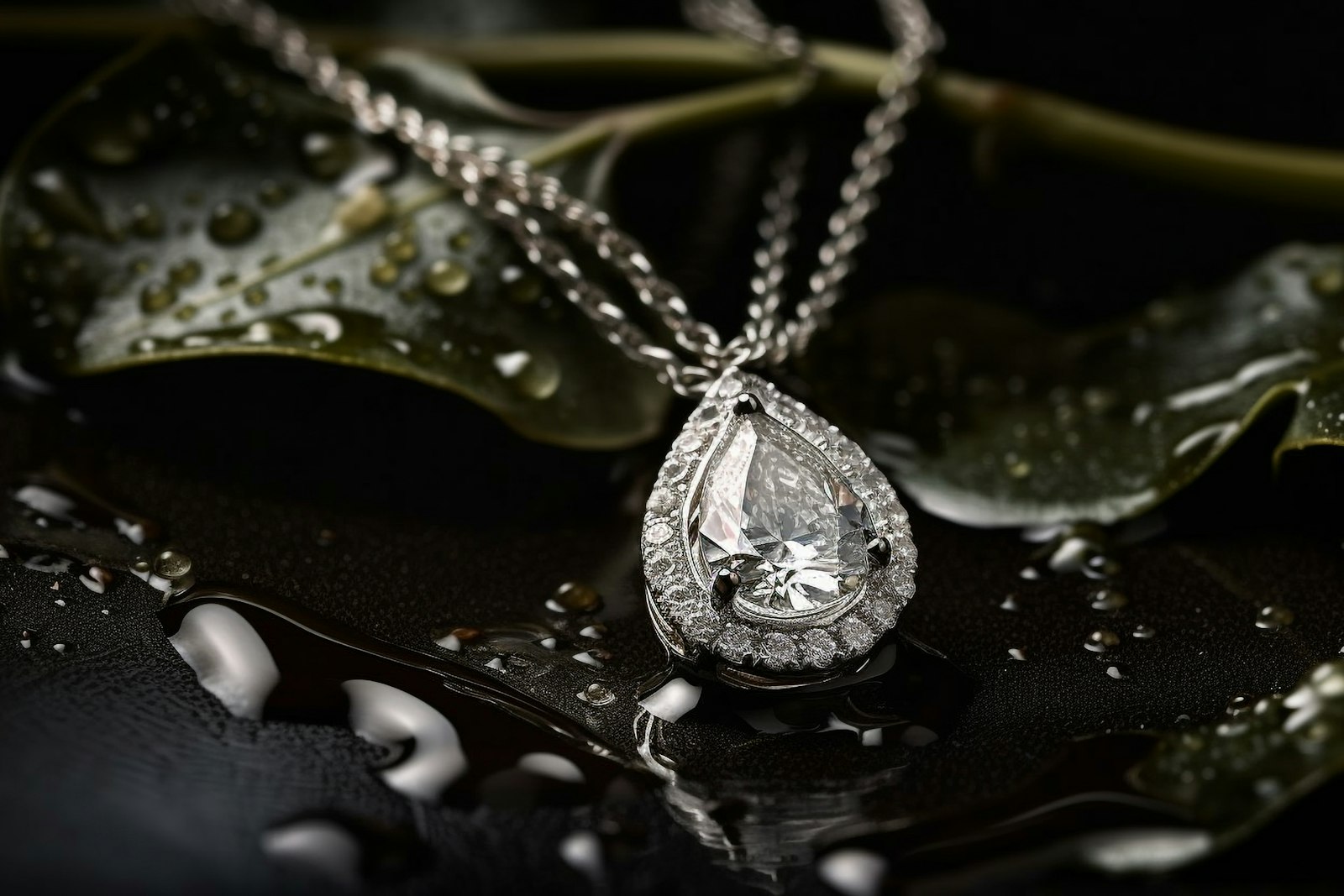
Fine diamonds have served as stores of wealth for centuries. Most people do not buy them purely as investments — they buy them to mark something — but understanding how value behaves afterwards is useful for any buyer, and it is worth having straight before you spend rather than years later when you are trying to sell.
This is an honest account rather than a promotional one. The short version: some diamond jewellery holds its value considerably better than the rest, very little of it holds its value the way the word “investment” implies, and the gap between what you pay and what you can get back is usually much larger than buyers expect.
This article is general information, not financial advice. Diamonds are not a regulated financial product. Anyone considering jewellery as a financial asset should speak to a licensed financial adviser.
Retail Price and Resale Value Are Two Different Numbers
This is the single most important thing to understand, and it is where most disappointment comes from.
When you buy a diamond ring at retail, you are paying a price that includes a great deal besides the stone. When you sell it, you are being offered a price based on what the stone alone is worth to someone who intends to resell it again. Those two numbers are not close, and they are not meant to be.
The practical result is that most diamond jewellery resells for well under what was paid for it — often dramatically under. This is not a sign that you were cheated. It is the normal structure of a retail market, and it applies to furniture, cars and watches too. It is simply less well understood with jewellery, partly because the industry has spent decades using language that implies otherwise.
What the Retail Margin Actually Pays For
It helps to see where the money goes, because it explains why it does not come back.
- The chain of hands. Rough is sold, cut, polished, sorted, sold again to a wholesaler, then to a retailer. Each step is a business that has to make a margin.
- The physical shop. Rent in a good location, secure premises, insurance on stock, staff who can actually answer questions, and lighting and display that cost real money.
- Holding stock. A jeweller has capital tied up in inventory that may sit for a year. That has a cost.
- The setting and the making. Metal, labour, design, and the workshop that sizes and finishes the piece.
- Marketing and the brand. With a designer or heritage name, a meaningful share of the price is the name itself.
- Service you use later. Cleaning, claw checks, resizing, and the goodwill of somewhere to go back to.
Most of that is spent by the time you leave the shop. A buyer purchasing your ring second-hand is not buying the shop, the service or the marketing — only the goods. This is why the offer is lower, and why a piece that felt expensive can be valued modestly.
None of this is an argument against buying from a good jeweller. Service, expertise and recourse are worth paying for. It is an argument against confusing what you paid with what you own.
Why “Investment” Is Used So Loosely Here
“Investment piece” is one of the most elastic phrases in jewellery retail. Sometimes it means a stone with genuine rarity. More often it means “expensive”, or “you will keep it a long time”, or simply “please buy this”.
The looseness matters because it borrows credibility from financial language without accepting any of the obligations that come with it. A regulated investment product has disclosure requirements, a prospectus, historical performance you can check and a supervised firm behind it. A diamond has none of these. Nobody has to tell you what a comparable stone last traded for. Nobody has to show you a track record.
So treat “investment” in a jewellery context as a description of durability and sentiment, not of expected financial return. If a seller uses the word in a stronger sense, ask them directly what they would pay you for the same piece tomorrow. The answer is informative.
What Tends to Hold Value Better
Value retention is not evenly distributed. A small proportion of fine jewellery does hold up considerably better than the rest, and the reasons are consistent.
Genuine rarity
Ordinary commercial goods are, by definition, not scarce. What holds value is what cannot be easily replaced: fancy coloured diamonds of good saturation, notably large stones, or combinations of characteristics that are genuinely uncommon rather than merely good. Scarcity is the mechanism — if a buyer can readily find another one, there is no premium.
Signed pieces
Work by a recognised maison or a recognised twentieth-century designer carries a name that the second-hand market prices independently of the stones. A signature, a maker’s mark or a serial number is often the difference between a piece being sold as jewellery and being sold as a diamond.
Provenance and period
A documented history — who owned it, where it was made, when — adds value that has nothing to do with the material. So does an intact period piece that has not been altered. Recutting an old stone to modern proportions, or replacing an original setting, can quietly remove the very thing a specialist buyer was paying for.
Complete original documentation
The original grading report, the box, the receipt, the maker’s papers. This is the cheapest form of value protection available and the one most often lost. A stone with a current, verifiable report from a respected laboratory sells more easily and for more than the same stone without one, because the buyer is not being asked to take a risk.
Condition and integrity
Worn claws, a chipped girdle, a heavily polished band or a replaced shank all reduce what a piece fetches. Sensible wear and periodic checks preserve value in a way that is entirely within your control.
The Ordinary Commercial Stone
Set against that, the piece most people actually own is a well-cut white diamond in a common size range, in a modern setting, of a type produced in very large numbers.
There is nothing wrong with such a stone. It is beautiful and it may be exactly the right purchase. But it is not rare, and rarity is what resale prices reward. Its second-hand price is set by how easily a buyer can source an equivalent, which is: very easily. Realistic expectations here are not pessimism, they are just accuracy.
Selling: Three Routes, Three Trade-offs
Dealer or trade buyer
Fastest and most certain. You are selling to someone who must resell at a profit, so the offer reflects the wholesale value of the goods minus their margin and their risk. Expect the largest gap between offer and retail. Get more than one offer — they vary more than people assume.
Auction
Appropriate for pieces with rarity, a signature or provenance. It can achieve strong prices because it puts competing specialist buyers in one room. But there are seller’s commissions, sometimes photography and insurance charges, the timetable is set by the sale calendar rather than by you, and a piece that fails to sell can be harder to place afterwards. Reputable auction houses will tell you honestly whether a piece is right for them.
Private sale
Potentially the highest price, because you cut out the middle margin. Also the slowest, the most effort, and the one with real practical risks around payment, security and misrepresentation. It works best where you have documentation that lets a private buyer trust what they are getting.
The Spread, and the Missing Market
Two structural features deserve stating plainly.
The first is the spread: the gap between what a dealer will buy at and what the same dealer will sell at. It exists in every market that has intermediaries, and in jewellery it is wide, because turnover is slow, capital is tied up and each piece has to be assessed individually. You cross that spread when you buy and again when you sell.
The second is illiquidity and opacity. There is no public exchange for diamonds, no transparent last-traded price, no published bid and offer that anyone can look up. Trade price lists exist, but they are guidance for professionals rather than a market price, and they are not written for you. Each stone is individual, and its worth is a matter of expert opinion rather than a quoted number. This means selling takes time — often months rather than days — and that you cannot easily verify whether an offer is fair without seeking several.
An asset you cannot value transparently and cannot sell quickly is a poor candidate for anything you might need to convert to cash in a hurry.
The Cost of Holding
Anything held for a long time carries running costs, and jewellery is no exception. Insurance is an annual premium. Secure storage, if you use a safe or a deposit box, is a recurring charge. Valuations for insurance purposes need periodic updating, and each update has a fee. Servicing — claw checks, rhodium plating on white gold, restringing — adds up across decades.
None of these are large individually. Over twenty or thirty years they are not trivial either, and any honest assessment of what a piece has “returned” has to net them off. They also mean the true break-even on a resale is higher than the purchase price alone suggests.
A Sensible Way to Think About It
Diamonds do have real qualities that a bank balance does not. They are effectively permanent, they need no maintenance to survive, they can be worn and enjoyed while you hold them, and they carry substantial value in a small, portable form. Those are genuine attributes, and they are why fine jewellery has been passed down families for generations.
What they are not is a financial product. There is no reliable appreciation to count on, no guaranteed floor, no market you can check, and no regulator standing behind the transaction. A piece may be worth more in thirty years or considerably less, and nobody selling it to you knows which.
The practical position, then: buy jewellery because you want to own and wear it, at a price you are content to have spent whatever happens next. Choose well, keep the paperwork, look after it, and know what you have. If it holds its value, that is a welcome outcome rather than the reason you bought it. And if you are genuinely thinking about diamonds as part of a financial plan, that is a conversation for a licensed adviser, not a jeweller and not an article.