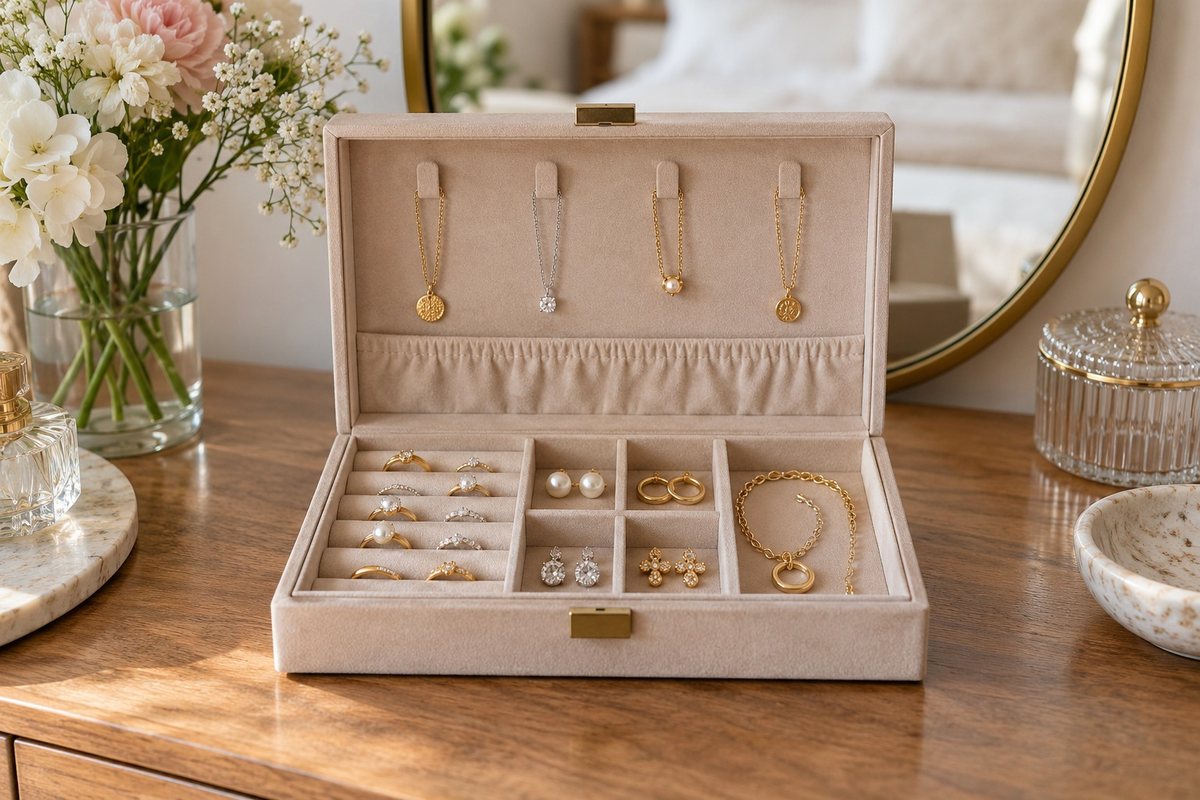
The best way to store jewellery is to keep every piece separate, clean and dry: rings in their own slots, chains hung or fastened and laid flat, silver sealed away from air with an anti-tarnish strip, and pearls flat in a soft pouch. Keep the collection out of the bathroom, away from heat and strong sunlight, and put pieces away as soon as you take them off. Separation stops scratches and tangles; dryness slows tarnish.
This article contains affiliate links. As an Amazon Associate I earn from qualifying purchases, at no extra cost to you. Affiliate disclosure.
This guide explains why jewellery scratches, tarnishes and tangles, how to store each type of piece, how to choose a box or roll, how to pack for travel and how to put pieces away for the long term. None of it needs special equipment.
At a glance
- One piece, one space. Shared compartments are where most scratching happens, because diamonds and hard gems scratch metal and softer stones.
- Dry beats everything. Bathrooms and steamy laundries speed up tarnish; a bedroom drawer or wardrobe is better.
- Silver needs air control; pearls need the opposite. Seal silver with an anti-tarnish strip, but never seal pearls in airtight plastic for long.
- Fasten every clasp before storing a chain or bracelet. It is the simplest way to stop tangles.
- Travel light with a padded case, and keep valuables in carry-on luggage.
Why jewellery gets damaged in storage
There are three main problems, and each has a different cause.
Scratching: the hardness problem
Materials scratch anything softer than themselves. Diamond is the hardest natural material, rating 10 on the Mohs scale, so a loose diamond ring can scratch almost every other piece it touches, including sapphires and rubies (9), emeralds (7.5 to 8) and every precious metal. Gold, platinum and silver are all much softer than gemstones. Opals and turquoise sit around 5 to 6.5, and pearls lower still, so they pick up fine scratches easily. When pieces rub together in a shared compartment, the harder piece always wins.
Tarnish: the chemistry problem
Tarnish is a surface reaction, mostly between metals and sulphur compounds in the air. Sterling silver is the most affected, because both the silver and its copper content react. Lower-karat gold, which contains more alloy metals, can also discolour over time, while high-karat gold and platinum are largely unaffected. Humidity, perfume, hairspray, household cleaning products and some woods, glues and fabrics speed the process up.
Tangling: the movement problem
Fine chains tangle when they are left loose and allowed to move. Every time a drawer opens or a bag is carried, the chain shifts and loops through itself. Knots that are pulled tight can kink or stretch links and, at worst, break a fine chain.
The core rules of jewellery storage
- Store pieces separately. Each item should have its own compartment, pouch or slot so that nothing rubs against anything else.
- Keep it dry. Bathrooms are the worst place for jewellery because of steam and humidity.
- Keep it dark and cool. Long exposure to strong sunlight can fade some gemstones, such as amethyst and kunzite, and heat is unkind to pearls, opals and amber.
- Put jewellery on last and take it off first. Apply perfume, lotion and hairspray before your jewellery, and remove it before cleaning, swimming or exercising.
- Clean before you store. Skin oils and residue attract dirt and can speed up tarnish. A gentle wipe with a soft cloth is enough after most wears.
- Fasten clasps. Closing a necklace or bracelet clasp before storing it stops the ends from threading through each other.
How to store each type of jewellery
| Type of piece | Main risk | Best storage | Avoid |
|---|---|---|---|
| Diamond and gemstone rings | Scratching other pieces | Ring roll or slotted tray, one ring per slot | Loose in a dish or shared compartment |
| Fine chains and pendants | Tangling, kinks | Hanging, or clasp fastened and laid flat | Bundled loose in a drawer |
| Tennis and link bracelets | Scratching, tangling | Fastened, flat, own section | Stacked with softer pieces |
| Stud earrings | Loss, scratching | Small compartment or earring card, backs on | Loose backs in a pile |
| Pearls | Scratches, dryness, stretched silk | Flat in a soft fabric pouch | Hanging long-term; airtight plastic |
| Sterling silver | Tarnish | Anti-tarnish pouch or sealed bag with strip | Open dishes in humid rooms |
| Plated and costume pieces | Plating wearing away | Own pouch or box, away from fine jewellery | Rubbing against harder pieces |
Diamond and gemstone rings
Rings are best stored upright in a ring roll or a slotted tray so that the stones do not touch other pieces. If you own several diamond rings, give each its own slot. Rings with softer or more fragile stones such as opal, pearl, emerald or turquoise benefit from their own soft pouch. Regular cleaning matters too, and the guide to cleaning diamonds safely covers methods for different stones.
Necklaces and fine chains
Chains are happiest hanging. A necklace stand, hooks inside a wardrobe door or a jewellery box with a tall hanging section all keep chains straight. If you must lay them flat, fasten the clasp, lay the chain out straight and keep it in a separate compartment. A simple trick for drawers and travel is to thread one end of a fine chain through a drinking straw and fasten the clasp around the outside. If you are choosing a new pendant, the diamond pendant buying guide covers chain strength and clasps.
Bracelets and bangles
Rigid bangles can be stacked on a bracelet bar or stored flat, ideally with a soft divider between each. Link and tennis bracelets should be fastened and laid flat in their own section. Tennis bracelets in particular should not be bundled with other pieces, because every diamond along the line can scratch whatever sits next to it.
Earrings
Stud earrings are easy to lose and easy to scratch. Store each pair in a small compartment or push the posts through a fabric earring card with the backs attached. Drop and hoop earrings can hang from a small stand or sit in a divided tray.
Pearls
Pearls need different care from almost everything else. They are soft, they do best with a little moisture in the air, and they are often strung on silk. Store strands flat rather than hanging, because hanging can stretch the silk over time. Keep them in a soft fabric pouch, away from harder pieces, and avoid sealing them in airtight plastic for long periods. The guide to wearing and caring for pearls and diamonds has more detail.
Sterling silver
Silver needs protection from air and humidity. Anti-tarnish pouches, anti-tarnish strips placed in a drawer or box, and small zip-lock bags with the air pressed out all slow tarnish noticeably. Silver set with soft stones still needs separation from harder pieces. The sterling silver gemstone jewellery guide covers silver care in more depth.
Costume and plated jewellery
Plated pieces have a thin surface layer that wears away with friction, so storing them loose shortens their life. Keep them separate from fine jewellery, both to protect the plating and because some base metals can react with moisture and mark nearby pieces. The guide to gold vermeil and gold filled jewellery explains how long different coatings tend to last.
Comparing storage options
There is no single right answer. Most people end up using a combination: a main box at home and a roll or case for travel.
| Storage option | Best for | Strengths | Limitations |
|---|---|---|---|
| Lined jewellery box with compartments | Everyday collections | Separates pieces, keeps out dust and light | Shared compartments still allow rubbing if overfilled |
| Individual soft pouches | Pearls, soft stones, silver | Full separation, portable, inexpensive | Harder to see what you own at a glance |
| Ring roll or slotted tray | Rings | Keeps stones apart and upright | Only suits rings |
| Necklace stand or hooks | Chains and pendants | Prevents tangles, easy to choose from | Exposed to dust, air and light |
| Anti-tarnish bags or strips | Sterling silver, lower-karat gold | Slows tarnish significantly | Strips and linings need replacing over time |
| Drawer insert with small trays | Larger collections | Hidden, flexible layout, dark and dust-free | Pieces can slide if trays are too big |
| Travel case or roll | Trips and moving | Compact, padded, secure fastening | Small; not ideal for long-term storage |
What to look for in a jewellery box
A good jewellery box is less about appearance and more about what is inside. Look for a soft, non-abrasive lining such as velvet, suede or microfibre. Check that compartments are small enough to hold one item each and that there are dedicated ring slots and a tall section for hanging necklaces. A lid that closes properly keeps out dust and light.
If you own a lot of silver, an anti-tarnish lining is worth considering. Some untreated woods and certain glues and felts can give off compounds that encourage tarnish, so a box intended for silver is usually lined with treated fabric. For valuable pieces, some people prefer a small home safe, and the guide to insuring and protecting fine jewellery discusses security and insurance in more detail.
Storing jewellery when you travel
- Take less. Choose a small number of versatile pieces rather than packing the whole collection. The guide to building a jewellery collection that lasts suggests which versatile pieces work hardest.
- Use a padded travel case or roll with separate ring slots, earring holders and a section for chains.
- Thread fine chains through a straw or lay them in folded tissue before packing.
- Keep valuable jewellery in your carry-on bag rather than in checked luggage.
- Never leave rings on a hotel sink or bedside table. Return pieces to the travel case every time you take them off.
- Keep a simple list or photographs of what you packed so you can check everything before you leave.
Long-term storage
Some pieces are worn only a few times a year, and heirlooms may sit for longer. For long-term storage, clean each item, make sure it is completely dry, and wrap it individually in acid-free tissue or a soft pouch. Silver can go into a sealed bag with an anti-tarnish strip. Pearls are best taken out and worn occasionally, and their strings checked before wearing.
Even pieces in storage benefit from an occasional look. Check settings and clasps once or twice a year so that a problem can be repaired before the piece is worn again.
Our picks on Amazon: jewellery storage
Separate compartments and anti-tarnish protection cover most of the storage advice above.
- Homde Large Jewellery Box (5 layers): lined compartments and ring rolls to keep pieces apart.
- Travel Jewellery Case: a small zipped case for taking a few pieces away without tangles.
- Rosenthal Collection Anti-Tarnish Strips (100): small strips that slow silver tarnish in boxes and bags.
Prices and availability change. For valuable, antique or sentimental pieces, ask a professional jeweller before cleaning or treating them.
Common mistakes
- Keeping everything in one dish or pouch. It is the fastest route to scratched gold and chipped softer stones.
- Storing jewellery in the bathroom. Steam, humidity and toiletries speed up tarnish, and rings near a basin are easily knocked down the drain.
- Hanging pearl strands. Over time the silk can stretch and the knots loosen.
- Sealing pearls or opals in airtight plastic for years. These organic or water-containing gems do better with some air.
- Putting pieces away dirty or damp. Residue and moisture both encourage tarnish.
- Never replacing anti-tarnish strips. They stop working once saturated; follow the maker’s replacement guidance.
- Packing valuables in checked luggage. Keep them with you.
Storage checklist
- Every piece has its own compartment, slot or pouch
- Diamond and gemstone pieces are kept away from softer materials
- Necklaces are hanging, or fastened and laid flat
- Silver is protected with anti-tarnish bags, strips or a sealed bag
- Pearls are stored flat in a soft pouch, not in airtight plastic for long periods
- Jewellery is kept out of the bathroom and away from heat and strong sunlight
- Pieces are wiped clean and fully dry before going away
- Clasps and settings are checked at least once or twice a year
- A travel case is ready, and valuables stay in carry-on luggage
Sources this guide draws on: the Mohs scale of mineral hardness as used in GIA gemstone care guidance; GIA’s care and cleaning advice for pearls and individual gemstones; and Jewelers Mutual guidance on storing jewellery to limit tarnish, scratching and loss.
FAQ
Can I store all my diamond jewellery together?
It is better not to. Diamonds can scratch each other’s metal settings, and even other diamonds, if they rub together. Give each piece its own slot or pouch, even within the same box.
Do zip-lock bags really stop silver from tarnishing?
They slow it down considerably by limiting contact with air and moisture. Press out as much air as possible and add an anti-tarnish strip for the best result. Avoid this method for pearls and opals, which do better with some air circulation.
Why are my gold chains tangling even in a box?
Chains tangle whenever they can move freely. Fasten the clasp, lay the chain out straight in its own compartment, or hang it. For travel, threading the chain through a straw is a simple fix.
Is it safe to keep jewellery in the bathroom?
It is one of the least suitable places. Humidity speeds up tarnish, steam and products leave residue, and rings left near a basin are easily lost. A bedroom drawer or wardrobe is a better choice.
Should I keep jewellery in its original box?
Original boxes are fine for a single piece, especially if they have a fitted slot or cushion. They take up a lot of space for a larger collection, though, so many people keep the boxes for resale or gifting and use a compartment box day to day.
How should I store a piece I hardly ever wear?
Clean it, dry it thoroughly, wrap it individually and keep it somewhere cool, dark and dry. Check it once or twice a year, and have the clasp and settings inspected before wearing it again.
Good storage is not complicated. Keep each piece separate, keep the collection dry and out of strong light, and build the habit of putting jewellery away the moment it comes off. Those small steps protect both the beauty and the value of a collection, so every piece is in good condition when it is finally passed on.