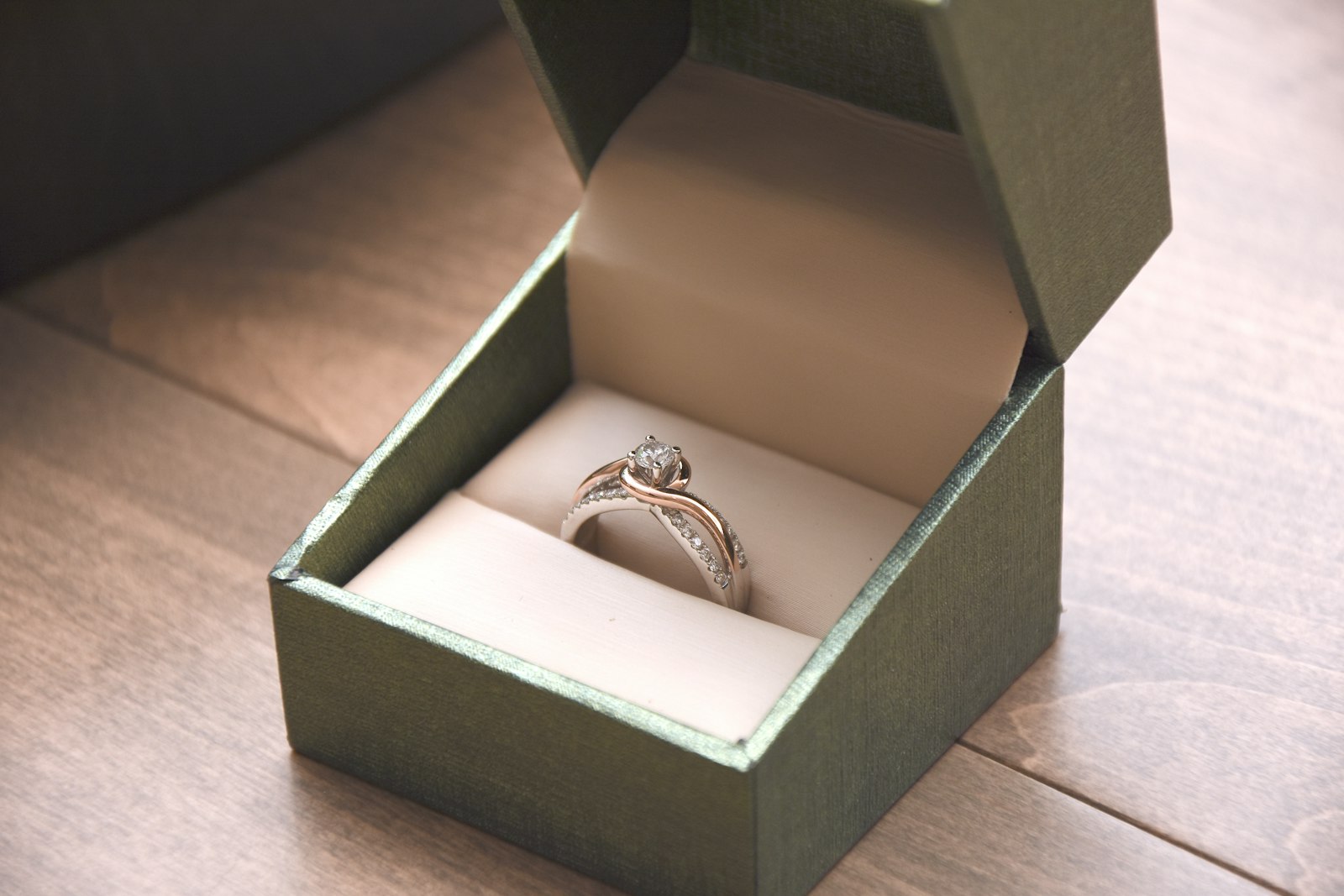
Engagement ring trends evolve, yet timeless designs remain perpetually elegant. Whether you are shopping or designing a custom piece, understanding which way taste is moving helps you choose something truly special.
The trouble with most trend writing is that it is built to expire. A ring is not. So the useful question is not what looks current this season, but which directions have staying power and which are decoration you may tire of.
How to read a trend: three layers, three speeds
Ring design moves at three speeds, and separating them makes shopping far easier.
The silhouette is the slowest layer. Solitaire, three-stone, halo, cluster: these outlines have been in continuous use for a century or more, drifting in and out of favour but never disappearing. Choose here for taste, not fashion.
Metal colour moves in cycles of roughly a generation. White metals dominated from the late nineties; warm golds have been steadily returning. A ring in an out-of-favour metal does not look wrong, it looks of its period.
Surface detail is the fast layer: hidden halos, fluted baskets, twisted shanks, the profile of a cathedral shoulder. These date quickest. Express fashion here, or better, in a wedding band or stacking ring you can swap later without touching the engagement ring.
The minimalist solitaire: the trend that never leaves
The simple solitaire never goes out of style, and minimalist designs remain as strong as ever, with buyers appreciating the focus on the diamond itself.
What is worth knowing is that a “simple” solitaire still contains decisions, and they determine whether you enjoy wearing it.
- Band width. A narrow band flatters the hand and makes a stone read larger, but very thin bands bend out of round, wear through at the palm side and are awkward to resize.
- Height above the finger. A low-profile setting slips under gloves and sleeves and catches on far less. A tall cathedral or trellis mounting shows the stone’s profile beautifully but sits proud and takes more knocks.
- Claw count and shape. Four claws show more of the outline; six hold more securely and suit larger stones. Slim tapered tips look elegant and wear down sooner than heavier rounded ones.
- The gallery. An open gallery lets light in from beneath and is far easier to clean. A closed one traps hand cream and dulls the stone from underneath.
A solitaire is also unforgiving. Nothing distracts the eye, so how well the stone has been cut does all the work. Judge the ring in movement under room light and daylight, not sitting still under shop spotlights, which flatter almost anything.
Vintage and antique-inspired designs
Vintage-inspired engagement rings blend romantic nostalgia with modern craftsmanship. The recurring styles are worth knowing by name, because they wear very differently.
- Art Deco: geometric patterns, often featuring emerald or asscher cuts, with milgrain edging, filigree panels and calibré-cut coloured accents set flush against white metal. Step cuts show clarity rather than hiding it, so you read the stone as a window rather than a firework.
- Victorian: ornate metalwork, often in rose gold or platinum, with hand engraving, scrollwork and old mine or old European cuts. Those older cuts have chunkier facets and a softer, broader flash that comes alive in warm, low light.
- Halo designs: a centre stone surrounded by smaller diamonds, creating extra sparkle and visual size. The trade-off is maintenance: the tiny stones sit in bead settings that can loosen, and losing one is a repair job.
- Three-stone rings: symbolising past, present and future. The contemporary version plays with mismatched shapes, an oval or emerald-cut centre flanked by tapered baguettes, half-moons or trapezoids.
One practical distinction: an antique-inspired ring is new, so it can be sized, repaired and matched to a band easily. A genuinely antique ring often cannot be resized safely and may have a thin, worn shank. Both are lovely; they ask different things of you.
Silhouette: where the real shift has been
The most durable change of recent years has not been in settings at all. It has been in the outline of the centre stone. Elongated shapes have moved from unusual to mainstream: oval, pear, elongated cushion, elongated radiant and marquise. They cover more finger for a given weight, which is why they read larger, and they suit slimmer bands. Step cuts have come back with them, trading brilliance for long, calm flashes of light, which is exactly the appeal for people who find round brilliants busy.
A few things to know before committing to an elongated stone:
- Long shapes can show a darker band across the centre where light is not returning cleanly. Look for it in person.
- Pointed tips on pears and marquises need a claw over them. An unprotected point is the commonest place for a chip.
- An elongated stone spins visibly if the ring is slightly loose, so sizing matters more here than with a round.
- Some outlines need a shaped wedding band to sit flush. Ask before you buy, not after.
Coloured gemstone centres
While diamonds dominate, alternative gemstones are gaining ground, and some suit daily wear far better than others.
- Sapphires (think Princess Diana’s iconic ring, now worn by the Princess of Wales) are the standout choice. As a corundum, sapphire sits just below diamond for hardness, takes knocks well, and comes in far more than blue: teal, green, peach, grey and colour-change stones. Ruby is the same mineral and behaves the same way.
- Emeralds (sophisticated and timeless) are the romantic option that asks for care. They are typically included, and most are treated with oil or resin to soften surface-reaching fissures. That treatment can be disturbed by heat and ultrasonic cleaning, so an emerald ring wants a protective setting and gentle washing.
- Spinel, tourmaline and garnet are underrated middle ground: durable enough for regular wear, and not yet common in bridal.
- Moissanite offers diamond-like sparkle at a very different price point, with its own distinct fire.
- Lab-grown diamonds are chemically and optically the same material as mined ones, so they behave identically in wear.
Those last two have considerations of their own that we cover elsewhere. The design consequence here is that a coloured centre stone changes which metal flatters it, and usually invites a simpler setting so the colour carries the ring. Diamonds themselves have widened too: salt-and-pepper, grey and champagne stones, and rose cuts with their flat backs and low domed tops, have moved from fringe to popular.
One firm caution. Opal, pearl, moonstone and tanzanite are lovely and unsuited to an everyday ring. They are soft, brittle, or both, and a ring lives on the most exposed part of the body.
Metals: mixed, warmer, and honest about upkeep
There is a clear return to mixed metals. Combining white gold with rose gold accents, or platinum with yellow gold details, creates sophisticated, personalised looks, and it solves a real problem: many people want a warm band but a neutral metal around a colourless stone. The metals also behave differently, which matters more than the colour.
- Platinum is dense, holds claws securely and needs no plating. Scratches displace metal rather than removing it, so it develops a soft grey patina many people prefer; a polish restores the shine.
- White gold is naturally a slightly warm grey, so it is almost always rhodium plated to look bright white. That plating wears, most visibly on the palm side, and needs redoing periodically: a maintenance item rather than a defect, but worth knowing.
- Yellow gold is having a long, steady return. Higher karat is richer in colour and softer; lower karat is harder and paler.
- Rose gold takes its colour from copper in the alloy, so the shade varies noticeably between makers. It hides fine scratches well.
If you go two-tone, ask how the join is made and how the ring would be resized later. Mixed-metal work is routine for a good bench jeweller, but it makes repairs more involved.
What is fading, and what is coming back
Read these as directions rather than predictions.
Losing ground: very large halos that swamp a modest centre stone; ultra-thin bands chosen purely to make a stone look bigger; pavé on every surface, including the gallery underside where it collects grime; and rigid bridal sets sold as an inseparable pair.
Gaining ground: bezels and half-bezels, which protect the stone’s girdle and suit active hands; chunkier, sculptural bands where the metal is part of the design; step cuts; hidden halos; and stones set lower to the finger.
Not moving: the solitaire, the three-stone, the plain band.
Custom and bespoke designs
Many couples now commission custom rings reflecting their own story, and working with a jeweller on a one-of-a-kind piece does ensure the ring is genuinely yours. The process is worth understanding first.
- Choose the stone first, then design around it. The setting’s proportions follow the stone’s exact measurements, not just its carat weight.
- Ask to see CAD renders, and if possible a resin or wax model. A render on screen looks very different from the object on a hand, and handling a model catches problems drawings hide.
- Ask who is doing the setting, and whether it is in-house. Setting is where a design succeeds or fails.
- Agree the timeline and revision points in writing, including what happens if the finished piece is not right.
- Get the grading report with the finished ring, plus a note of the metal and accent stone details.
Bear in mind that a design built tightly around one stone is difficult to reset later. If that gives you pause, semi-custom is a good middle path: take a standard setting and change the band width, claw style or profile, or add an engraving.
Choosing a ring you will still like in ten years
The perfect engagement ring balances personal style, quality and budget. A few tests help more than any trend list:
- Try the style on for as long as the shop allows and notice what it snags on. Knitwear and hair are honest critics.
- Look at it in three lights: daylight, indoor light and something dim.
- Think about the wedding band now. Whether it sits flush, needs shaping, or will be worn on the other hand changes what you should buy.
- Match the ring to the life. Hands-on work, small children and sport all favour lower profiles, bezels and sturdier claws.
- Ask what the ring will need over time: replating, claw retipping, occasional tightening. Every ring needs something; you are choosing which.
Whether you choose a halo, a step cut in a bezel or a classic solitaire, select what speaks to you rather than what a list says is current. Trends are a map of what is available, nothing more. The ring goes on your hand every day for years, and that is the only vote that counts.